
Himalayan Pink Salt vs Regular Salt-a very common comparison that people make in terms of salt. Well, salt is a basic ingredient found in every kitchen, yet not all salt is the same. In recent years, Himalayan pink salt has gained particular attention as a better alternative to regular table salt. Whether individual buyers, retailers, or bulk importers, every one of them should know and understand the real differences between these two types of salt and so that they can make informed decisions. So, here with this question that many ask about the differences, we’ve come up with the detailed blog sharing the key differences of each salt with you. Well, let’s begin
Origin and Source
The first thing we should know is each salts origin and source because the most noticeable difference lies in where each type of salt comes from.
Himalayan pink salt is mined from ancient salt deposits formed millions of years ago, primarily in the Punjab region of Pakistan. These deposits are believed to be untouched by modern pollutants. These are considered more natural because of that.
Regular table salt, on the other hand, is usually extracted from underground salt mines or obtained by evaporating seawater. It undergoes extensive processing before reaching consumers, which significantly alters its natural state.
Processing and Refinement
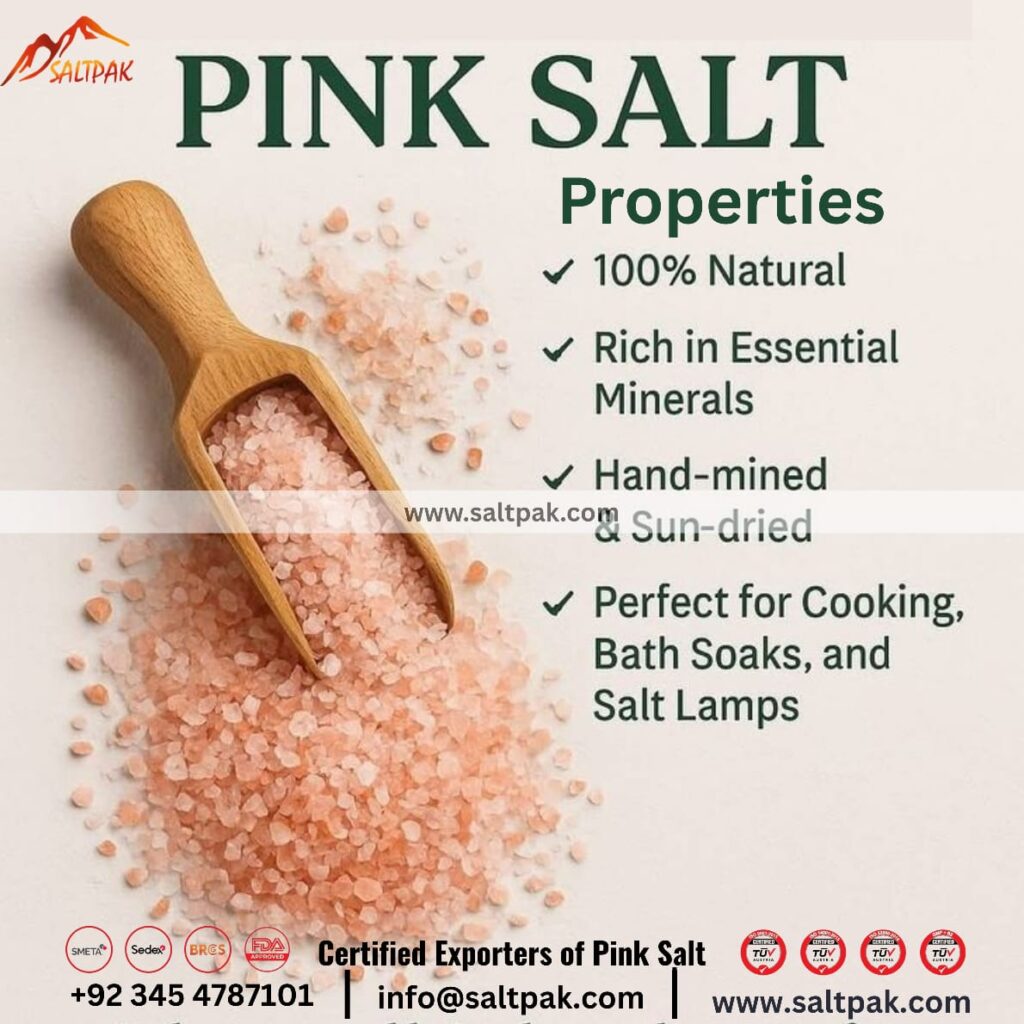
When we talk about processing and refinement. Himalayan pink salt is typically minimally processed. What actually happens is that after mining, it is washed, crushed, and sorted into different grain sizes. This limited processing helps it retain its natural structure and trace minerals like magnesium, potassium, etc.
In contrast, regular salt is heavily refined. During processing, impurities and minerals are removed, and additives such as anti-caking agents are often included to improve flow and shelf life. Many brands also add iodine to help prevent iodine deficiency, making it nutritionally important in certain regions.
Mineral Content of Himalayan Pink Salt vs Regular Salt
One of the most talked about features of Himalayan pink salt is its mineral content. Himalayan pink salt contains small amounts of minerals like calcium, potassium, and magnesium, which give it its characteristic pink color and give multiple benefits over normal table salt. But let me tell you guys that you as buyers should know that the mineral quantities in Himalayan salt are very small and may not significantly impact overall nutrition, but has an upper hand than table salt.
While regular salt is primarily composed of sodium chloride, usually around 97–99%. While it lacks the variety of trace minerals found in Himalayan salt, iodized table salt provides iodine which is an essential nutrient for thyroid health.
Taste and Culinary Use
If we talk about taste, Himalayan pink salt has a slightly milder and more complex flavor compared to regular salt. Its texture can also vary, from fine grains to coarse crystals, making it popular as a finishing salt in gourmet cooking.
On the contrary, regular salt has a sharper, more straightforward salty taste and dissolves quickly, making it suitable for baking and everyday cooking where precise measurements are required.
For chefs and food businesses, the choice often depends on the desired flavor profile and presentation.
Appearance and Presentation
Appearance plays a significant role, especially for retail buyers. Himalayan pink salt stands out with its soft pink to deep reddish tones, making it visually appealing for packaging and food presentation.
Regular salt is plain white and uniform. While effective for general use, it lacks the visual uniqueness that premium markets often seek.
Pricing and Market Position
Himalayan pink salt is generally more expensive due to its mining process, transportation, and premium branding. It is often marketed as a specialty or luxury product.
Regular salt is widely available and affordable, making it the default choice for mass consumption.
For importers and retailers, this difference creates two distinct market segments: a high-volume, low-margin market for regular salt and a lower-volume, higher-margin opportunity for Himalayan salt products.
Health Considerations of Himalayan Pink Salt vs Regular Salt
There is a common perception that Himalayan pink salt is healthier than regular salt. While it does contain trace minerals, the overall health impact is not significantly different when consumed in typical amounts. But yes it is minimal processed so definitely a better alternative to normal table salt.
The key health factor for any salt is sodium intake. Excessive consumption of either type can contribute to health issues such as high blood pressure. Buyers should focus more on moderation rather than the type of salt alone.
Which One Should Buyers Choose?
The right choice depends on the intended use and target market. Himalayan pink salt is ideal for:
- Premium retail products
- Gourmet food applications
- Decorative and wellness-related items
Regular salt is better suited for:
- Everyday household use
- Large-scale food production
- Budget-conscious markets
Conclusion
Himalayan pink salt and regular salt each have their own strengths and market appeal. While Himalayan salt offers visual uniqueness and a premium image, regular salt remains a practical and essential commodity. For buyers, the decision should be based on purpose, pricing strategy, and customer preferences rather than trends alone.