
When we talk about Himalayan salt, people often think of a pink salt shaker or a glowing salt lamp. Both are popular and mostly used Himalayan salt products, but Himalayan salt has found its way into far more products than these.
From kitchen to wellness accessories and animal nutrition products, Himalayan salt’s diversity has spread into many forms today. Some products are still unknown by some people. Let’s explore 7 rare Himalayan salt products that you might be unaware of.
1. Himalayan Salt Foot Domes
Himalayan salt foot domes are an unusual addition to the world of salt wellness products.
These foot domes are something unusual if you hear the word salt. These products are designed according to the shape of foot to place it underneath your foot. Mostly used for relaxation and as natural foot care routines. The unusual design makes them stand out from ordinary bath salts and foot soaks.
After a long day, this product can really help your feet detoxify all the bad energy from your foot. Some people enjoy placing them in a warm, comfortable setting while taking time to unwind.
Yes, remember bcause salt can absorb moisture from the surrounding environment, proper storage is important. Keeping salt foot domes somewhere dry can help maintain their condition.
2. Himalayan Salt Inhalers
Himalayan salt inhalers are another product that many people have never encountered.
A salt inhaler is a small handheld device containing salt crystals or granules. Users breathe through the mouthpiece, allowing air to pass over the salt inside the device.
Salt inhalers are often marketed as wellness products for people interested in salt-based breathing routines. However, they should not be treated as a replacement for medical treatment, and claims about treating respiratory conditions should be approached carefully.
Their compact size also makes them different from larger salt-room or salt-wall installations.
3. Himalayan Salt Animal Lick Blocks
This may be one of the most surprising products on the list.
Himalayan salt isn’t only used by people, but animals use it too.There are Himalayan salt licks blogs being produced especially for livestock and other animals. They can be made from compressed or shaped Himalayan rock salt for animals.
Animals need and seek salt, and these lick blocks are a very convenient source of sodium. People place them where animals can easily access them to get benefit from them. Livestock owners find these salt licks a very convenient, natural and best source of salt for their precious animals such as cattle, sheep, goats and horses..
The important point is that animal salt licks are different from culinary salt products. They should be selected according to the animal species, size, diet, and farming requirements.
4. Himalayan Salt Tiles
Himalayan salt tiles are becoming very unique trend for people now a days. Interior designers, spa owners, restaurant owners are getting really fascinated by these tiles. They are using it as decorative constructive material but with many health benefits.
They can be incorporated into:
- Salt walls
- Spa interiors
- Meditation rooms
- Feature walls
- Restaurants
- Wellness centres
- Decorative panels
When illuminated, the natural tones of the salt can create a warm and distinctive atmosphere.
Salt tiles do require appropriate installation and maintenance, particularly in areas with high humidity. Proper sealing, ventilation, and installation methods should be considered depending on the application.
5. Himalayan Salt Serving Plates
You’ve probably seen Himalayan salt blocks used for cooking, but salt serving plates take the idea in a slightly different direction.
These plates can be used to present selected foods while adding the visual appeal of natural Himalayan rock salt. Depending on their design and thickness, some salt plates may also be suitable for chilling, heating, or cooking.
They can make an attractive addition to restaurants, catering businesses, and home kitchens.
However, they aren’t indestructible. Sudden temperature changes can cause natural salt products to crack, so users should always follow the manufacturer’s instructions for heating and cooling.
6. Himalayan Salt Soap Bars
Himalayan salt soap may look like an ordinary bar of soap at first glance, but its composition and texture make it quite different.
Salt soap bars are often made using Himalayan pink salt alongside other soap ingredients. Depending on the formulation, they can provide a firm, mineral-rich bar with a distinctive texture.
Some salt soap products are marketed for exfoliation and skin care. However, individual skin types react differently to cosmetic products, and salt-based products may feel drying or irritating for some people.
For anyone trying Himalayan salt soap for the first time, a gentle approach is sensible. Avoid using it on broken or irritated skin and discontinue use if irritation occurs.
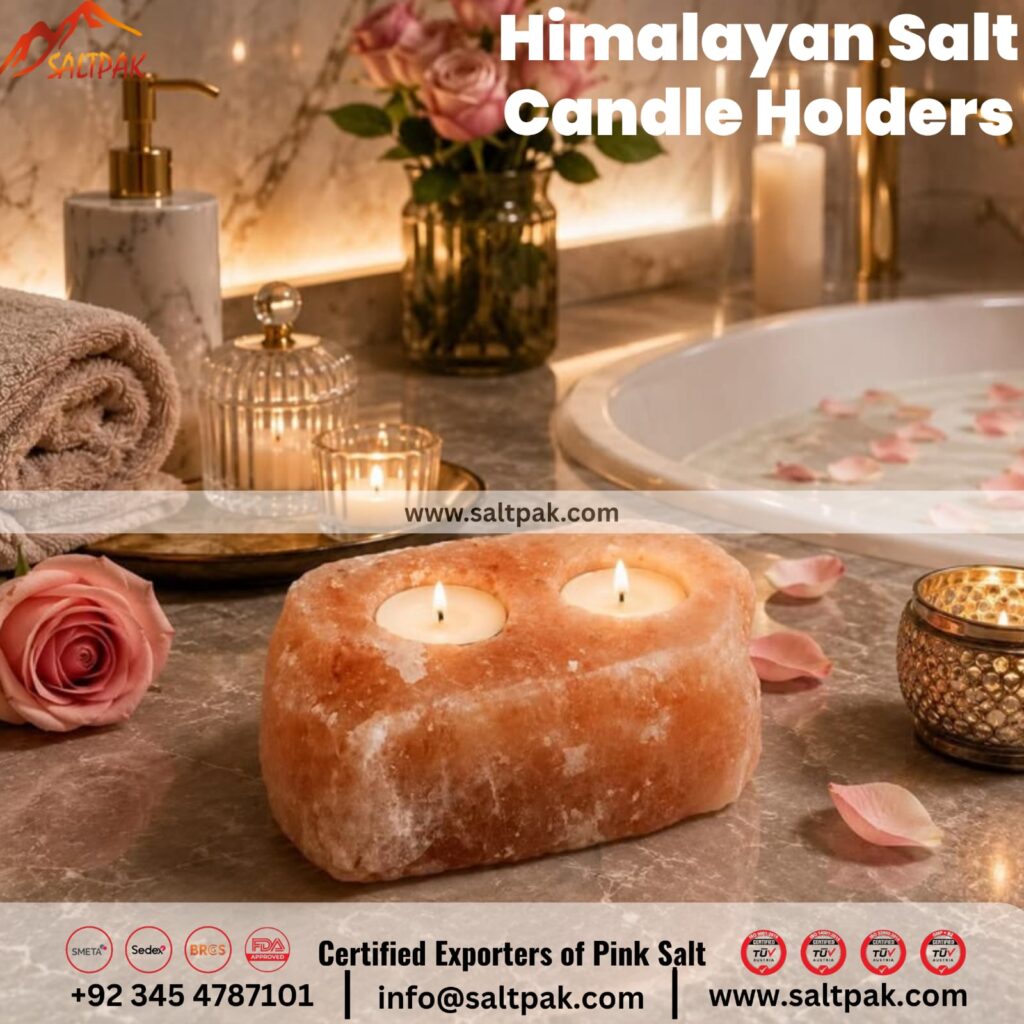
7. Himalayan Salt Candle Holders
Himalayan salt candle holders are more familiar than some of the products above, but they are still relatively unusual compared with standard candle holders.
They are typically carved from natural Himalayan rock salt, meaning every piece can have its own colour, shape, and mineral pattern.
When a candle is placed inside, the translucent salt can create a warm, cosy glow. This makes salt candle holders popular for:
- Bedrooms
- Living rooms
- Restaurants
- Spas
- Meditation spaces
- Gift collections
Their natural variations are part of their appeal. Two candle holders made from Himalayan salt may look noticeably different from one another.
As with any candle holder, fire safety is essential. Place it on a stable, heat-resistant surface and keep it away from curtains, paper, children, pets, and other flammable materials.
Why Are These Himalayan Salt Products Considered Rare?
The word “rare” doesn’t necessarily mean that these products are impossible to find. In many cases, it simply means they aren’t as widely known as Himalayan pink salt, salt lamps, or everyday culinary salt.
Its just that Himalayan rock salt is so versatile that it can be shaped, carved, crushed or processed into many different forms and can be used as decor items, wellness products and as agricultural applications.
How to Choose the Right Himalayan Salt Product
With so many unusual products available, it is important to consider what you actually want to use the product for. Here are some tips.
For cooking: Look for food-grade Himalayan salt products specifically intended for culinary use.
For home décor: Salt tiles, candle holders, and decorative pieces can add a natural touch to interiors.
For wellness routines: Check the intended purpose of the product and avoid relying on exaggerated health claims.
For livestock: Choose animal-s-pecific salt licks and consider the needs of the particular animal.
For skincare: Look for properly formulated cosmetic products rather than assuming that every piece of Himalayan salt is suitable for direct skin application.
Most importantly, check the product’s intended use, ingredients, manufacturing information, and care instructions before purchasing.